What is a PR package? How to create one, with examples
What goes inside a PR package, who should receive it, and how to pitch it without wasting a perfectly good box.
A PR package gives a creator, journalist, or reviewer something to try, usually a product or a selection of samples. PR stands for public relations. Sometimes the product is theirs to keep. Sometimes it's a review loan that needs returning. Sending products this way is often called product seeding.
Sending someone a box doesn't mean they owe you a post. If you want a video, a deadline, or permission to use their content in an ad, agree on those terms before sending anything.
Before you spend anything on packaging, find people who have a reason to want what's inside. A reviewer who covers repairable headphones might welcome a modular headset. A reporter covering the manufacturer's earnings probably won't.
Watch Munch With Des unbox a Dippin' Dots x Kokos Candy PR package.
The box gets the product into someone's hands. The digital press pack gives them the facts, images, and contact details to cover it. A short URL or QR code in the box connects the two, without five pages of printouts.
Send a package when trying the product would help someone review it, demonstrate it, or check what you're claiming. For example:
- a reviewer needs hands-on time before a launch;
- a journalist needs a sample to check a claim or demonstrate how the product works;
- a creator has already shown an interest in the product category;
- the product is hard to judge from a press release alone.
If the person never covers your subject, or there's no useful reason to try the product, save the postage. A free product won't fix a weak pitch or buy a positive review.
Start with recent work, not follower counts.
For journalists and reviewers, read a few recent pieces and check the publication's policy on samples. Do they test products, or do they cover the business behind them? That distinction will tell you more than an industry label.
For creators, look beyond the follower count. What do they keep coming back to? How do they use products in their content? Read the comments and look at previous partnerships. You're looking for a plausible fit, not just a large number in a spreadsheet.
Check existing contacts too. Their interests, job, or delivery address may have changed since you last spoke. An old business card isn't permission to send a surprise parcel three years later.
SparkToro's audience research can help identify publications, podcasts, sites, and accounts followed by a particular audience. Treat that as research, not an automatically approved mailing list.
If possible, ask whether the person wants the product before shipping it. This saves money and avoids sending unwanted goods, especially when the package is large, perishable, or difficult to return.
For a Clarks influencer gifting campaign, agency Gifta sent 70 creators a package containing their chosen pair of shoes, branded hand cream, a stress ball, and a Tony's Chocolonely bar. The content direction was to work the shoes into their own outfits and everyday activities.
Gifta reports 374 pieces of content, 631,000 impressions, and a 95% post rate. Those are the agency's reported outputs, not independently verified sales results. Its case study doesn't establish whether creators had separate fees or posting agreements, so don't treat that post rate as a forecast for no-obligation gifts.
Choosing the shoes matters more than the extras. Get the size and style right first; nobody can give a useful account of shoes they can't wear.
Pack for the recipient, not for the unboxing shot.
Branding can help someone recognise the campaign, but it does not need to take over the box. A handwritten note based on the recipient's actual work is more convincing than printing their first name on six disposable objects.
Could someone open this box and try the product without emailing you for the basics? Check for:
- The right product and variant, with the accessories needed to try it.
- A short note naming the sender, explaining why the product is relevant, and giving a reply contact.
- Instructions, ingredients, allergens, storage details or safety information where relevant.
- A working short URL or QR code to the price, availability, images and other supporting material.
- Return instructions and an agreed return date for a borrowed review unit.
- Protective packing, a confirmed delivery address, and any required customs documentation.
- Check carrier rules for batteries and liquids, protect breakable parts, and account for temperature and shelf life.
- Choose packaging the recipient can open, reuse, or recycle easily.
Download the checklist, tracker and budget · Excel. Free, no signup required.
Kenya H shares how she makes branded PR boxes for her business.
Rodds Coffee asked packaging company Showcase Creative to develop a mailer for a new iced coffee flavour, intended for 50 influencers. It included iced coffee, maple syrup, and salt. The package needed to keep the coffee below 7°C in transit.
Showcase Creative says it redesigned the insert to hold two ice packs beneath each bottle, then tested a pre-production sample with a temperature monitor on a 23-hour journey. According to its case study, the coffee stayed below 5°C throughout that test. That describes one trial, not every shipment.
With chilled products, the box has a job to do before anyone films it. Test a finished parcel on a realistic journey before ordering the batch.
Budget for the product, packing time, postage, and any campaign fees. For the product itself, agree on the cost basis with your team. Its retail price and what it costs you to supply aren't necessarily the same thing.
Here's a hypothetical US-dollar budget for 20 domestic shipments, not a market average or a supplier quote.
- 20 products at $18: $360
- 20 boxes at $4: $80
- 20 notes at $1: $20
- 20 shipments at $8: $160
- 3 packing hours at $25: $75
- One-off design: $100
- Base total: $795
- 10% reserve: $79.50
Planned total: $874.50 for 20 shipments, about $43.73 per recipient.
Paid creator work, taxes, customs, and return shipping aren't included in this example. Add them if they apply, and replace the sample costs with your own in the workbook.
Before ordering the batch, pack one box and get a shipping price for it. An oversized box or an international destination can change the calculation.
To cut costs, send fewer packages to better-matched people and use standard box sizes where they fit. A simple printed card and a link to supporting material can be enough. Spend first on protecting the product and delivering it to the right person.
A spreadsheet can manage a small campaign. For repeated outreach, a PR CRM helps keep contact preferences, outreach history, and previous coverage together. Keep shipment and return details in your campaign tracker.
A useful digital pack answers the questions a recipient is likely to have while drafting a story or planning content. Include:
- a short summary of the announcement;
- the product name, price, availability, launch date, and relevant specifications;
- high-resolution images with captions, credits, and clear download links;
- video or demo material when it explains something the images cannot;
- a press release or fuller story with the necessary context;
- spokesperson details and interview availability;
- a named press contact;
- usage restrictions, review-key instructions, or embargo details, if applicable.
Keep it at one stable URL. Attachments get lost, file versions multiply, and somebody eventually sends final-logo-v7-USE-THIS-ONE.png. Hosting the material online lets you correct a date or replace an image without sending the whole pitch again.
An online newsroom works well for this because the story, media, contact details, and related announcements can live together. With a Prezly newsroom, you can publish the supporting story and downloadable assets, then link to them from your pitch.
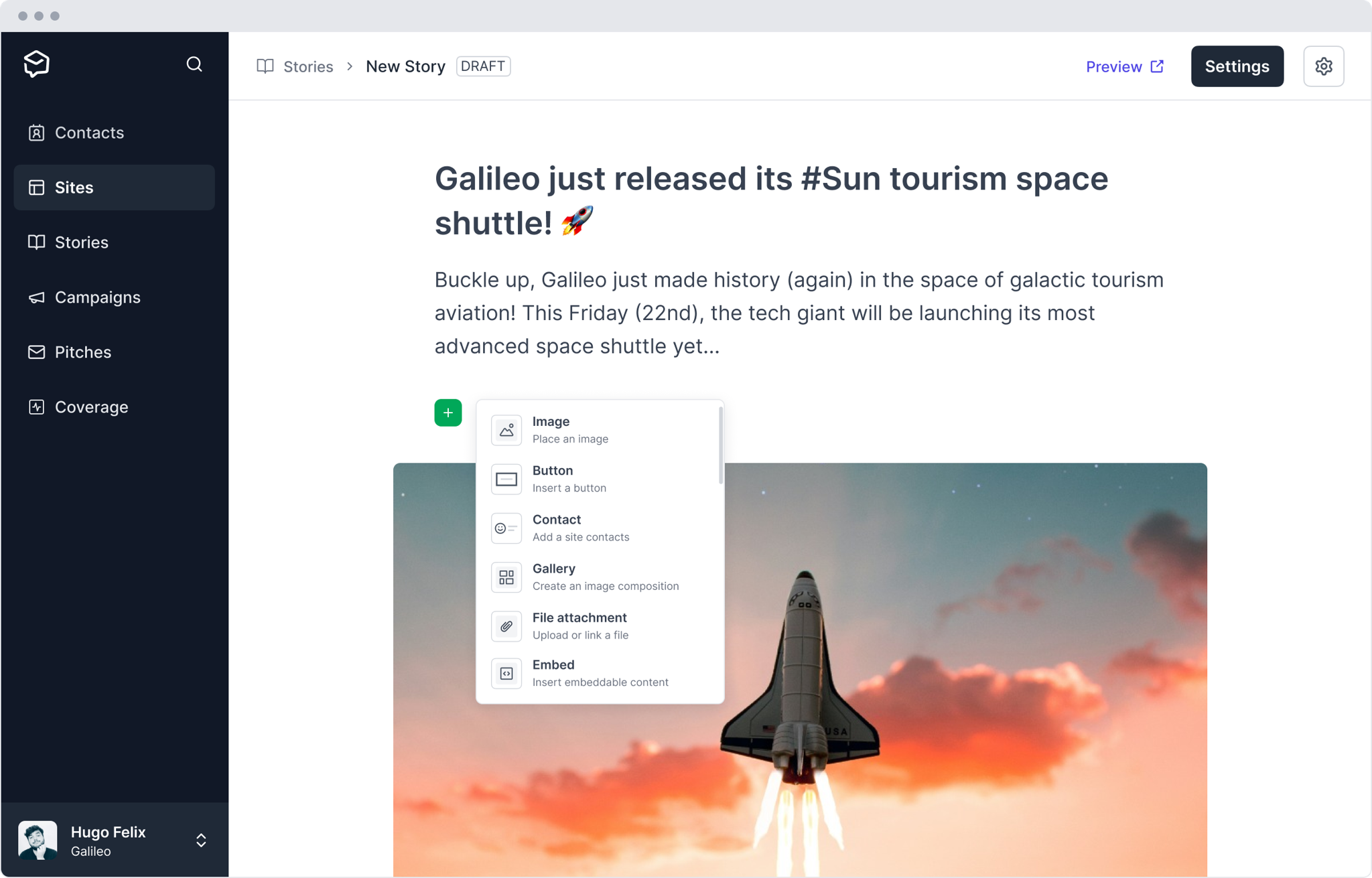
Start with a short offer, not a surprise delivery. Say why you've chosen this person and ask whether they'd like to try the product.
A simple pitch might look like this:
Hi Mina,
I saw your recent piece comparing repairable headphones. We're launching a modular headset on 15 October, and I thought it might fit a follow-up or future review.
Would you like a review unit? There's no obligation to cover it. The specifications, images, and return details are here: [link].
If it's not relevant, no problem. I won't send anything without your confirmation.
Mina can tell why you've written, when the product launches, and what you're offering. She can also say no without an awkward exchange. That's enough for a first email.
If you are working with a creator as part of a paid campaign, state the deliverables, approval process, usage rights, deadlines, and compensation separately. A gifted product with no agreement is different from commissioned content. The US Federal Trade Commission's influencer disclosure guidance treats free or discounted products as a material connection when a creator endorses the product. Rules vary by market, so check the requirements that apply to the campaign.
Give people the facts and files, then leave them room to do their job. A journalist doesn't need pre-written praise. A creator may need the right handle, link, or product details, but the voice should be theirs.
Prezly's PR outreach software lets you send a multimedia pitch, keep the story and assets linked, and manage replies and follow-ups alongside your contacts.
Here's how the headset offer could work once a reviewer accepts. This is an illustrative review loan, separate from the budget example above.
Suppose you're launching a headset with replaceable ear pads and cable. Offer it to reviewers who cover repairable audio equipment. Confirm which connector they need and whether they accept gifts or only review loans.
Send the headset, the appropriate cable, spare ear pads, and replacement instructions in protective packaging. Include a note that says why you offered it to this reviewer. If it's a loan, make the return date and prepaid return method explicit.
Hi Mina,
Thanks for agreeing to try the headset for your repairable-audio coverage. The spare ear pads and replacement instructions are inside. Product specifications, pricing, launch details and downloadable images are at [press-pack URL].
This is a review loan, with no obligation to publish. As agreed, it's due back on [date]; the prepaid return label is enclosed. Contact [name and email] if anything is missing.
[Sender name]
A repairability claim gives the reviewer something specific to test. Tell them which parts come off, where replacements are sold, and how to fit them. Spare ear pads are useful; instructions that stop at 'easy to replace' aren't.
Our press kit guide covers the supporting materials in more detail.
Record acceptance, the chosen variant, shipment reference, return date, replies, and the URL of any published review.
Download the blank recipient tracker · CSV. Keep delivery addresses in a restricted system and use a shipment reference in the shared tracker.
A delivery check is fine. Asking why someone hasn't posted about a gift isn't. Follow up when you can help with something, rather than to remind them what you spent.
Check the tracking and any timing you've discussed before writing. Ask whether anything was missing or whether they need help trying the product. If they decline or don't reply to that follow-up, leave it there.
Record the response in your PR list. Note returned packages, outdated addresses, coverage preferences, and opt-outs. Use those notes to avoid repeating the same mistakes on the next campaign.
Start the campaign with a question you can answer afterwards. Did reviewers accept the product and publish reviews? Did creators use it in their content? Record the packages that led nowhere too, otherwise your report only tells half the story.
Useful measures include:
- Delivery: packages accepted, delivered, returned, damaged, or declined.
- Outreach: replies, requests for information, and visits to the linked press pack when that data is available.
- Coverage: published articles, reviews, mentions, links, and relevant audience figures.
- Creator activity: disclosed posts and the comments, shares, saves, or clicks visible or reported for those posts.
- Business results: referral visits, tracked purchases, demo requests, or other conversions where attribution is reliable.
- Feedback: what recipients said about the product, supporting material, delivery, or packaging.
Use tagged URLs or campaign-specific codes if website activity matters. Compare results with the original goal and the full cost of the campaign.
A review or sale may have several causes, so don't give the package all the credit. Track referral visits or purchases where you can, and say where the trail ends. A traffic spike is worth investigating; it isn't proof the box paid for itself.
For product choice and delivery testing, see the Clarks gifting campaign and Rodds Coffee packing test above. The beauty-brand videos below are packaging inspiration, not evidence of sales or campaign ROI.
Open the original package video
Glossier used a locked box to tease an unreleased product. The format gave the recipient a simple visual hook before the reveal. Mystery can work for a launch, but it needs a clear reveal plan. A locked box with no useful follow-up is just an unusually photogenic inconvenience.
Open the original package video
This Drunk Elephant package uses bright product presentation and a personal note. The products remain easy to identify, and the packaging gives the recipient a ready-made demonstration of what arrived. Notice that the note supports the product rather than replacing the information needed to discuss it.
Open the original package video
Rare Beauty also uses a mystery-box format in this example. The closed package creates a question that works naturally in short-form video: what is inside? That is a useful mechanic for creators who already make launch and beauty content. It would be less useful to a reporter who needs specifications, pricing, and a quote before deadline, which is why the digital pack still matters.
A gifted PR package is free to the recipient. The brand pays for the product and delivery. A borrowed review unit is different: check when it needs to go back and who pays for the return. Neither arrangement automatically means the recipient gets paid for their time.
A no-obligation gift doesn't require a post. Read any terms before accepting, though. If a brand asks for a Reel or other content in exchange for the product, you're discussing a collaboration with deliverables, not simply receiving an unsolicited gift. Agree on the work, rights, timing, and compensation before saying yes.
Make it easy for a relevant brand to see what you cover and how to contact you. Put a business email on your profile, publish examples of your work, and use a brand's official creator application if it has one. A short pitch can link to a few relevant posts and explain who your audience is. There's no universal follower minimum, and applying doesn't guarantee a package. Only share your delivery address once you've checked who's asking for it.
If you endorse a product you received free or at a discount, the US FTC says that connection needs to be disclosed. Make the disclosure easy to notice alongside the endorsement. A gift doesn't become an independent purchase because nobody paid a cash fee. Check the rules in your market too.
Before you send the batch, let someone outside the campaign open a finished package. Can they tell what it is, why you've sent it, and where to find the details? If not, fix that first.
About the authors
 CE
 KB

Build better PR, with Prezly
- Create and publish: Build beautiful press releases.
- Build relationships: Keep your contacts organized.
- Reach your audience: Send targeted pitches.