

14 Best PR Analytics Software Tools (in 2026)
A collection of data analysis tools for modern PR teams.
Most PR teams don't struggle with doing the work.
They struggle with explaining it.
You plan campaigns, pitch stories, secure coverage – and then someone asks: "So… what did PR actually achieve?"
Because while PR generates visibility, relationships, and long-term brand value, those outcomes don't always show up neatly in a spreadsheet.
This is where PR analytics software comes in.
This guide breaks down the best PR analytics tools available today, how different tools approach measurement, and how to choose a system that helps your work build – not just report on what already happened.
In the tool overviews below, pros and cons are taken from public review data (Trustpilot, G2, Capterra); pricing information is similarly based on publicly available information.
Ready to take the guesswork out of your PR strategy?

PR analytics software helps PR teams track, measure, and understand the performance of their public relations efforts across different channels and media types.
At a basic level, this includes:
- Media coverage and brand mentions
- Campaign engagement (opens, clicks, replies)
- Web traffic to your website and newsroom
- Social media shares and sentiment analysis
These tools aggregate data from multiple sources and present it in dashboards and reports – giving comms teams a single view of how their work is performing across online news, broadcast, print, and social channels.
But good PR analytics software goes further. It helps answer questions like:
- Which stories actually resonated with journalists?
- Which media contacts consistently engage with your content?
- What kind of coverage leads to ongoing visibility?
- Is your PR performance improving over time – or resetting with each campaign?
Because ultimately, PR analytics isn't just about tracking activity – you need to understand the impact.
Despite having access to more data than ever, many PR teams still struggle to measure performance in a meaningful way. That's usually because they're measuring what's easy – not what's useful.
Traditional PR analytics focuses on number of mentions, estimated reach, and media impressions. These coverage metrics look impressive in reports. But they rarely provide actionable insights. They don't tell you whether journalists actually engaged with your story, how your content performed after distribution, or whether your visibility improved over time.
So you end up with reports that feel full – but don't say much. And when reporting lacks clarity, PR starts to feel difficult to justify to clients and stakeholders.
PR analytics is evolving – not because there are more metrics, but because expectations have changed.
Instead of asking "What happened?", teams are asking "What worked – and why?"
This moves PR analytics from activity-based reporting (what you did) to outcome-based insight (what actually made an impact). And that changes what kind of tools are useful.
Most PR analytics software falls into one of three categories:
Category | What it measures | Strength | Limitation |
Media monitoring tools | Coverage and mentions | Visibility tracking | Lacks context |
Campaign analytics tools | Outreach performance | Engagement data | Short-term view |
Publishing-first analytics | Full PR lifecycle | Long-term insight | Requires structured workflows |
Each type answers a different question – and understanding which question matters most to your team is the most useful starting point when choosing a tool.
Full breakdown of each tool further down the page.
Tool | Category | Best for | Starting price | Capterra rating |
|---|---|---|---|---|
Prezly | Publishing-first | End-to-end PR analytics | €100/month (Essential) | 4.6/5 |
Plausible | Web analytics | Newsroom traffic | $5/month | 4.6/5 |
Mixpanel | Behaviour analytics | User journeys | Free | 4.5/5 |
Ahrefs | SEO analytics | Backlinks and visibility | ~$100/month | 4.7/5 |
Google Analytics | Web analytics | Traffic and attribution | Free | 4.7/5 |
Cision | Monitoring | Enterprise reporting | Est. $7,200/year | 3.8/5 |
Meltwater | Monitoring | Share of voice | Est. $12,000/year | 4.0/5 |
Mention | Monitoring | Real-time alerts | $41/month | 4.7/5 |
Brandwatch | Social listening | Reputation tracking | Quote-based | 4.3/5 |
Brand24 | Sentiment analysis | Reputation insights | $79/month | 4.7/5 |
CARMA | PR measurement | Impact and attribution | Quote-based | 4.0/5 |
CoverageBook | Reporting | Visual PR reports | $99/month | 4.9/5 |
Muck Rack | Monitoring/outreach | Media relations analytics | Quote-based (est. $5,000+/year) | 4.2/5 |
BrandMentions | Social listening | Real-time brand monitoring | $99/month | 5.0/5 |
BuzzSumo | Content/SEO analytics | Content performance and PR research | $199/month | 4.5/5 |
Most teams don't need everything in this list. They need two or three tools that cover their specific gaps. Here's a practical way to think about it.
If you're primarily trying to prove PR's value to leadership or clients, the gap is usually reporting. You need something that makes coverage and campaign performance visible in a format stakeholders can understand. Start with CoverageBook for visual reporting, and a platform like Prezly for campaign-level analytics that connect outreach to results.
If you're running regular campaign activity and want to understand what's actually working – which contacts open, which stories get picked up, which newsroom content keeps attracting traffic – a publishing-first platform like Prezly, with integrated analytics, covers what you need without building a separate stack.
If you need to monitor what's being said about your brand across news, social, and broadcast, you need a dedicated monitoring tool. The right choice depends on scale and budget: Mention or BrandMentions for accessible real-time alerts; Brand24 if sentiment tracking matters; Meltwater or Cision if you need enterprise depth and global media coverage.
If you want to connect pitching directly to coverage outcomes – tracking which journalists received what, and what coverage resulted – Prezly and Muck Rack are the main options that join those two things together in one platform.
If your PR overlaps with SEO or content marketing, Prezly is a solid option as it combines newsroom analytics with campaign reports and a CRM. For deeper SEO insights, Ahrefs and BuzzSumo add a layer that most PR-specific tools don't cover.
If you're a small team on a tight budget, the practical starting point is Google Analytics for web traffic (free), Plausible if you want something cleaner and GDPR-friendly ($5/month), and CoverageBook for client reporting ($99/month). That covers the basics for under $110/month without committing to enterprise contracts.
The tools below are grouped by category, not ranked. Use the above to identify which category matters most before reading the full entries.
Prezly
Starting price: €100/month (Essential) | €250/month (Standard) | 14-day free trial | Around since: 2013 | Capterra: 4.6/5
Pros: All-in-one PR software | Analytics integrated across campaigns, newsroom, and CRM | Exportable campaign and traffic reports | Baked-in media monitoring | Easy to use | Real-time data
Cons: Standard plan limited to 2 users (additional users available as add-on) | Curated media lists are a separate purchase
Notable integrations: Integrates natively with Belga.press (formerly Gopress); external coverage provider integration available as an add-on; RSS integration with Talkwalker, Meltwater, Google Alerts, and other feeds.
Prezly integrates analytics directly into the PR workflow – connecting publishing, outreach, and relationship management in one place. Rather than pulling data from separate tools after the fact, everything is tracked as part of how work gets done.
On the campaign side, you can see which contacts in your PR CRM are consistently engaging with your pitches and stories, and export full campaign reports as a spreadsheet – covering both overall engagement stats (opens, clicks, unsubscribes) and per-recipient data (how many times each contact opened or clicked). Newsroom traffic stats are exportable too, making it straightforward to report on content performance over time.
Media monitoring is built directly into Prezly (powered by OPoint), so you can track coverage without needing a separate tool. Coverage is linked to the relevant contact, outlet, and story in your CRM – and if an outlet covers you that isn't already in your contacts, Prezly automatically creates a new contact record. For teams already using a preferred monitoring provider, external integration is also available as an add-on.
For media contacts, Prezly offers curated media lists built to your brief – by industry, audience, and story angle – and delivered directly into your CRM. Unlike large generic databases, these are researched and relevant rather than optimised for volume.
What makes Prezly different from monitoring-only tools is continuity. Because stories live in a permanent, publicly accessible newsroom rather than only in inboxes, you can track how content performs over weeks or months – not just in the immediate window after a send.
Best for: PR teams that want to measure long-term impact across publishing, outreach, and relationships in one connected workflow.
Good fit for:
- Growing PR teams needing structure and continuity in their analytics
- Agencies managing multiple client newsrooms and reporting on each
- Teams wanting campaign data, coverage tracking, and relationship history in the same place
Plausible Analytics
Starting price: $5/month | 30-day free trial | Around since: 2018 | Capterra: 4.6/5
Pros: Easy to use | Privacy-first | Works in all browsers | Lightweight | Real-time
Cons: Limited data depth | Could use more detailed documentation
Notable integrations: WordPress, Google Tag Manager, Ghost, HubSpot, Shopify, Squarespace, Webflow, Wix, and more.
Plausible is a privacy-first web analytics tool that provides a clean, simplified view of website traffic and engagement. It doesn't collect personal data, doesn't use cookies, and is fully GDPR, CCPA, and PECR compliant – which matters increasingly for teams operating in or covering European markets.
For PR teams, it's particularly useful for analysing newsroom performance and tracking how press releases drive traffic over time. It shows the most meaningful metrics in a single interface without requiring any specialist knowledge to interpret.
Plausible is integrated directly into Prezly accounts on most plans, so if you're already using Prezly you likely have it available without additional setup.
Best for: Teams that want lightweight, privacy-friendly analytics with a clear view of content performance – and no cookie banner.
Plausible is more like how web analytics used to be before surveillance capitalism became the default business model of the web.
– Marko Saric, Plausible
Mixpanel
Starting price: Free | Around since: 2009 | Capterra: 4.5/5
Pros: Highly customisable | Comprehensive documentation | Detailed user behaviour tracking | User-friendly interface
Cons: Steep learning curve | Customer support can be slow
Notable integrations: 115+ integrations including Segment, Google Tag Manager, Google Sheets, Shopify, and Customer.io.
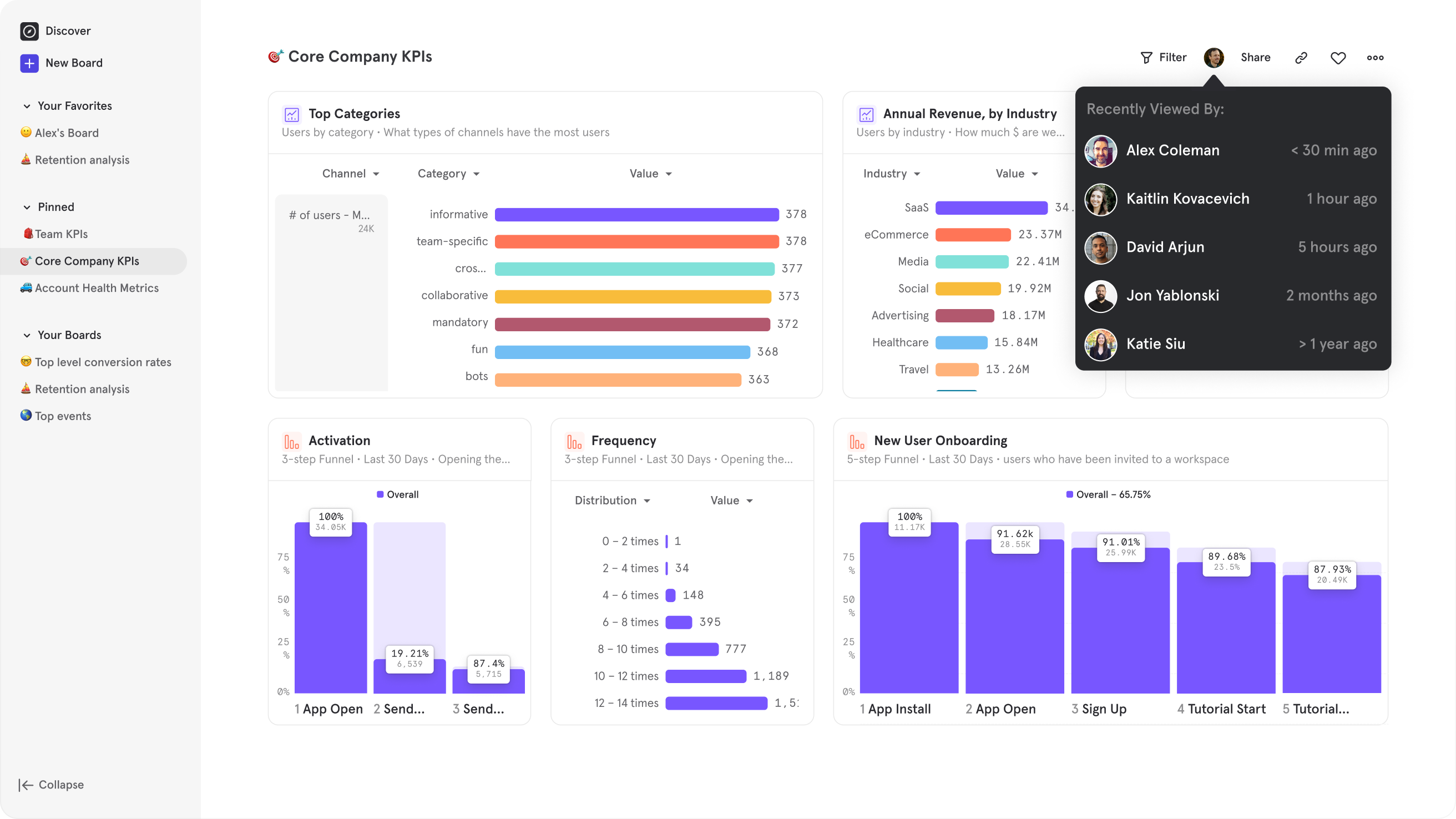
Mixpanel takes a more granular approach than most web analytics tools by focusing on user behaviour rather than just traffic. It lets you track how users move through a site – what they click, where they drop off, and how they interact with specific pieces of content. You can build custom dashboards to answer specific questions about how people use your newsroom or navigate from coverage to conversion.
It's a powerful tool, but honestly a bit overpowered for most PR use cases. For newsroom analytics specifically, something like Plausible is usually a better fit. Mixpanel earns its place when you need oversight of a complex flow – for example, understanding how people travel through your site before signing up, or which content types lead to meaningful downstream actions.
Best for: Teams that need deep behavioural insights and are comfortable with a more advanced analytics setup.
Google Analytics
Starting price: Free | Around since: 2005 | Capterra: 4.7/5
Pros: Free | Extensive documentation | Detailed reports | Widely supported
Cons: Complex interface | Privacy and GDPR concerns | Can be slow
Notable integrations: Agency Analytics, Google Ads, HubSpot, Mailchimp, Hootsuite, Salesforce, Zendesk, Marketo, and more.

Google Analytics remains one of the most widely used analytics platforms, offering detailed insights into website traffic, user behaviour, and acquisition channels. For PR teams it can be used to track where visitors come from, how they interact with content, which campaigns drive traffic and conversions, and how your newsroom performs relative to other parts of your site.
The ability to create annotations – marking campaign activity directly on traffic data – is particularly useful for attributing real impact to PR actions over time.
The downsides are well documented: a complex interface, a steep learning curve if you're new to digital marketing, and ongoing privacy concerns particularly around GDPR compliance in Europe. It's also a product where Google holds an outsized amount of power over how teams operate online – worth factoring in when thinking about your analytics stack long-term.
It may not be the prettiest thing in the world, but dang it's useful. It can also look a bit daunting is you're new to digital marketing. Fortunately, Google has kindly provided its own beginner's guide to using the platform.
Best for: Teams analysing traffic, attribution, and conversion data across multiple channels who are comfortable with a complex tool.
Ahrefs
Starting price: ~$100/month | Free webmaster tools available | Around since: 2011 | Capterra: 4.7/5
Pros: Deep-dive analysis | Extensive documentation | Frequently updated
Cons: Can get expensive | Significant range of reports to get familiar with
Notable integrations: Screaming Frog SEO Spider, Netpeak Checker, BuzzStream, Agency Analytics, and 35+ others.
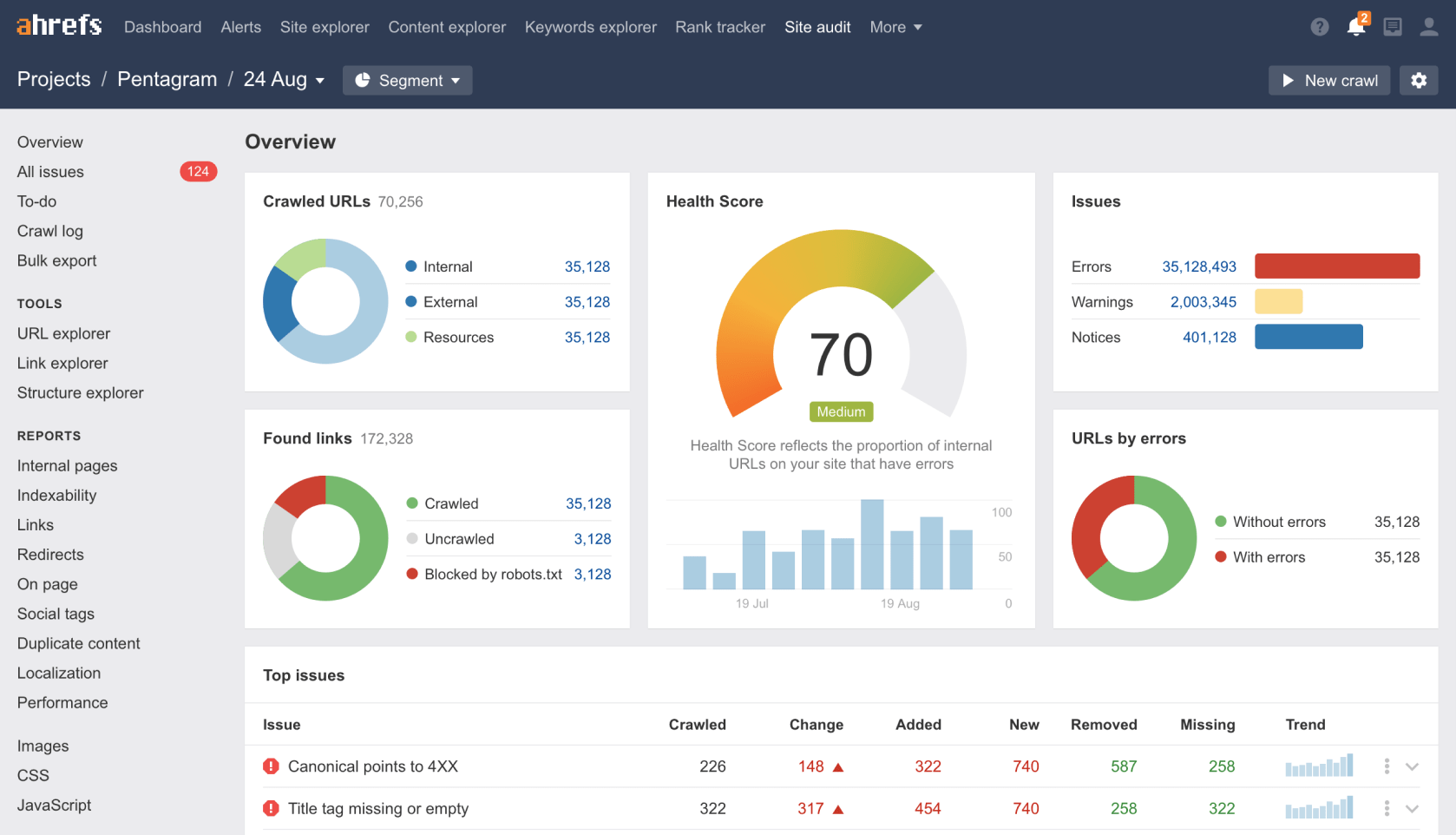
Ahrefs is primarily an SEO tool, but it plays an increasingly important role in PR analytics – particularly for teams that publish content to a newsroom or run thought-leadership programmes. It tracks backlinks, keyword rankings, and search performance, giving you a view of how media coverage translates into long-term online visibility.
In practice this means you can see which press releases or stories are earning backlinks, which publications are driving the most search authority to your site, and where there are keyword opportunities worth pursuing in your content. It bridges PR and SEO in a way that's useful for demonstrating compounding value from coverage over time.
It's very much a digital marketing and site optimisation tool, so it works best alongside a dedicated PR platform rather than as a standalone analytics solution.
Best for: Teams measuring the SEO and backlink impact of PR campaigns, or managing thought-leadership content with an eye on search visibility.
BuzzSumo
Starting price: $199/month | Free trial available | Around since: 2014 | Capterra: 4.5/5
Pros: Strong content performance data | Useful for journalist and influencer discovery | Good for tracking what's trending in your industry | Solid social engagement metrics
Cons: Expensive relative to what smaller teams use | Best features require higher-tier plans | Less useful as a standalone PR analytics tool
Notable integrations: API access on higher plans; connects with content and social stacks.
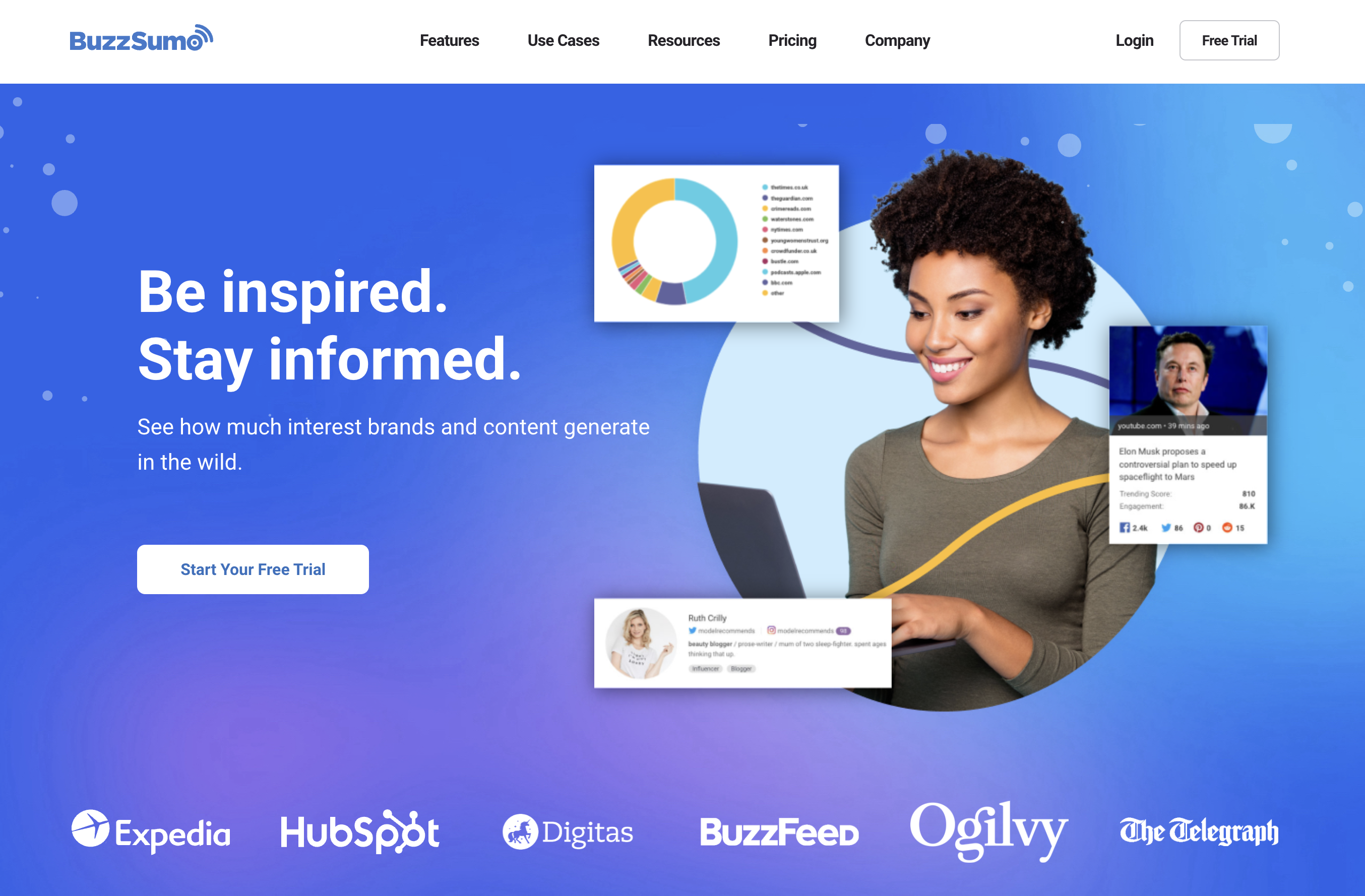
BuzzSumo sits at the intersection of content marketing and PR analytics. Its core strength is showing you what content is performing well across social platforms and search – which pieces are being shared, which topics are gaining traction, and which journalists and publications are covering specific subjects. For PR teams running thought-leadership programmes or trying to understand the media landscape before pitching, that context is genuinely useful.
In an analytics context, BuzzSumo is less about tracking your own coverage and more about understanding the environment your PR work operates in. You can use it to spot trending angles before pitching, identify which journalists are actively writing about your topic, and track how your published content performs across social channels over time.
It's not a replacement for a monitoring tool, and it won't give you sentiment analysis or campaign-level reporting. But used alongside something like Prezly or CoverageBook, it adds a research and performance layer that helps teams make better-informed pitching and content decisions.
Best for: PR teams running content programmes who want to track performance and identify opportunities, particularly those bridging PR and content marketing strategy.
Cision
Starting price: Est. $7,200/year | No free trial | Around since: 2012 (as TrendKite) | Capterra: 3.8/5
Pros: Helps identify key media | Customisable dashboards | Good customer support
Cons: Clunky interface | Can miss mentions | Expensive for smaller teams
Notable integrations: Custom connections via Cision's API.
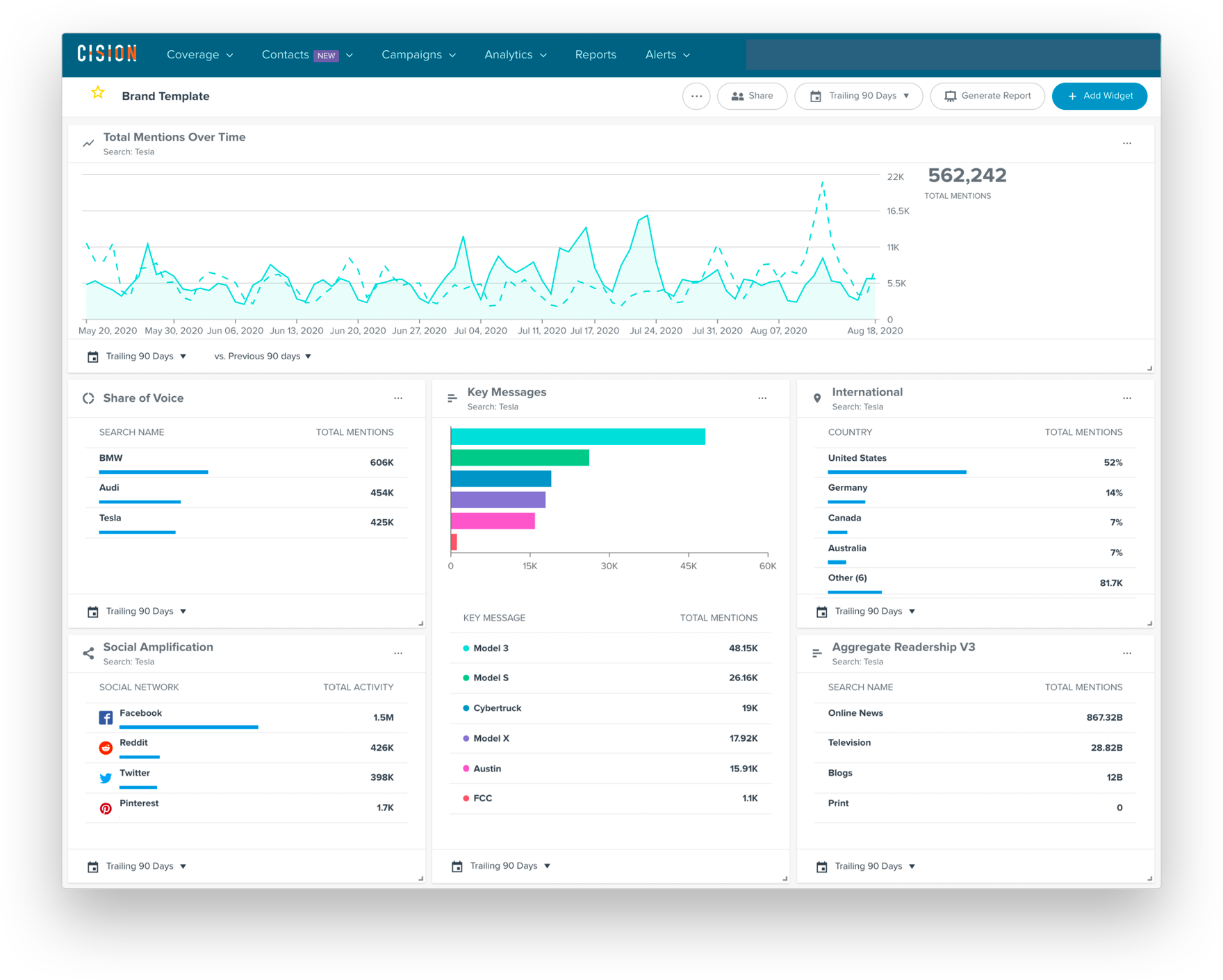
Cision is one of the most established names in PR software, and its analytics capabilities have expanded significantly since absorbing TrendKite in 2019. The platform lets teams track media coverage across print, broadcast, online, and social channels; measure share of voice and sentiment; and generate attribution reports that show how PR activity connects to web traffic and audience reach. Its journalist and media database – which it claims contains over 1.7 million contacts – is one of the largest available, and the PR Newswire integration means distribution and tracking can sit in the same workflow.
The main friction points are cost and complexity. Cision's interface draws consistent criticism in user reviews, and the pricing – estimated at $7,200/year at entry level, often significantly more – makes it difficult to justify for teams that don't need the full enterprise feature set. Some teams also find that database accuracy varies by region.
Best for: Large PR teams and agencies that need an end-to-end platform combining media database access, distribution, monitoring, and analytics – and have the budget to match.
.jpg)
We compare the features, pricing, and overall value of each platform to help you choose the one that best fits your business.
Meltwater
Starting price: Est. $12,000/year | No free trial | Around since: 2001 | Capterra: 4.0/5
Pros: Strong media intelligence | Social listening | Outreach tools
Cons: Media database can be outdated | Can miss mentions | Steep learning curve
Notable integrations: Google Analytics, Slack, Bit.ly, DingTalk. API integration available with Prezly, Domo, PowerBI, and Looker Studio.

Meltwater combines media monitoring, social listening, and analytics into one platform. Its particular strength is share of voice measurement – tracking how your brand's presence compares to competitors across media channels. It also lets teams monitor industry trends and connect PR activity with broader brand conversations, giving a clearer picture of where you sit in your industry's media landscape.
Like Cision, it's an enterprise-grade tool with enterprise-grade pricing. Teams focused primarily on pitching and outreach may find they're paying for more monitoring capability than they use.
Best for: Teams focused on media intelligence, share of voice, and trend analysis across multiple markets.
Mention
Starting price: $41/month billed annually | 14-day free trial | Around since: 2012 | Capterra: 4.7/5
Pros: Easy to read findings | Good alert setup | Finds mentions some other tools miss
Cons: Slower loading times | Some features reserved for enterprise plans
Notable integrations: Zapier, Slack, direct API for website and application connections.
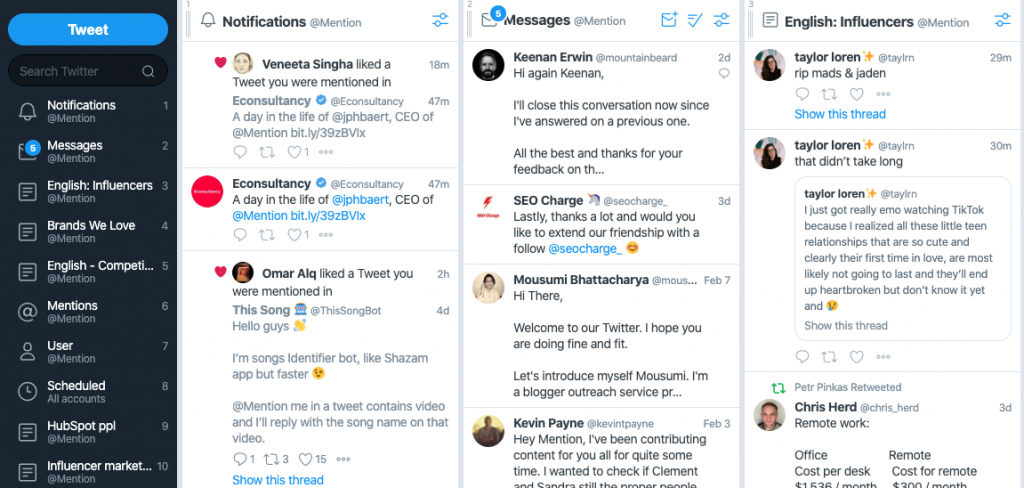
Mention focuses on real-time monitoring, tracking brand mentions across the web and social media as they happen. For PR teams, the most practical use is staying on top of coverage as it lands – rather than discovering it hours later in a digest – and being able to respond quickly when a story is gaining traction or a conversation needs managing.
At $41/month it's one of the more affordable monitoring tools that still covers multiple channels, and it's consistently noted in reviews for surfacing mentions that some competing tools miss. The trade-off is depth: reporting and analytics features are more limited than enterprise platforms, and some advanced features require upgrading to higher plans. But for teams that primarily need reliable, real-time alerts without enterprise-level spend, it does that job well.
Best for: PR teams and comms teams that need straightforward, real-time brand monitoring at an accessible price point.
CARMA
Starting price: Quote-based | No free trial | Around since: 1984 (!) | Rating: 4.0/5
Pros: Easy to get started | Generates in-depth annual reports
Cons: Pricier than some competitors | Navigation can feel convoluted
Notable integrations: X, Discord, Telegram, LinkedIn.

CARMA has been in the PR measurement space for over 40 years, and that history shows in how it approaches analytics. Most monitoring tools count what happened. CARMA is more focused on what it meant – analysing message pull-through (did your key messages actually appear in coverage?), audience reach quality, and campaign effectiveness in a way that connects media coverage to business outcomes rather than just reporting volume.
That emphasis on attribution and impact makes it particularly useful for organisations that need to justify PR spend at a strategic level: large in-house comms teams, public sector organisations, and brands where PR measurement needs to satisfy a leadership audience rather than just a PR one. It's not the right fit for teams that just need monitoring dashboards or campaign reporting – there are cheaper and simpler ways to do those things. But for serious PR measurement and evaluation work, few tools take it as seriously.
Best for: Organisations that need rigorous PR measurement and impact attribution, particularly those reporting PR's contribution directly to senior leadership or the board.
Muck Rack
Starting price: Quote-based (est. $5,000+/year) | No free trial | Around since: 2009 | Capterra: 4.2/5
Pros: Strong journalist database | Combines monitoring with outreach | Real-time coverage tracking | Good pitch-to-coverage attribution
Cons: Pricing not published; contracts required | Can be expensive for smaller teams | Database accuracy can vary
Notable integrations: TVEyes (for broadcast monitoring); API access on higher-tier plans.
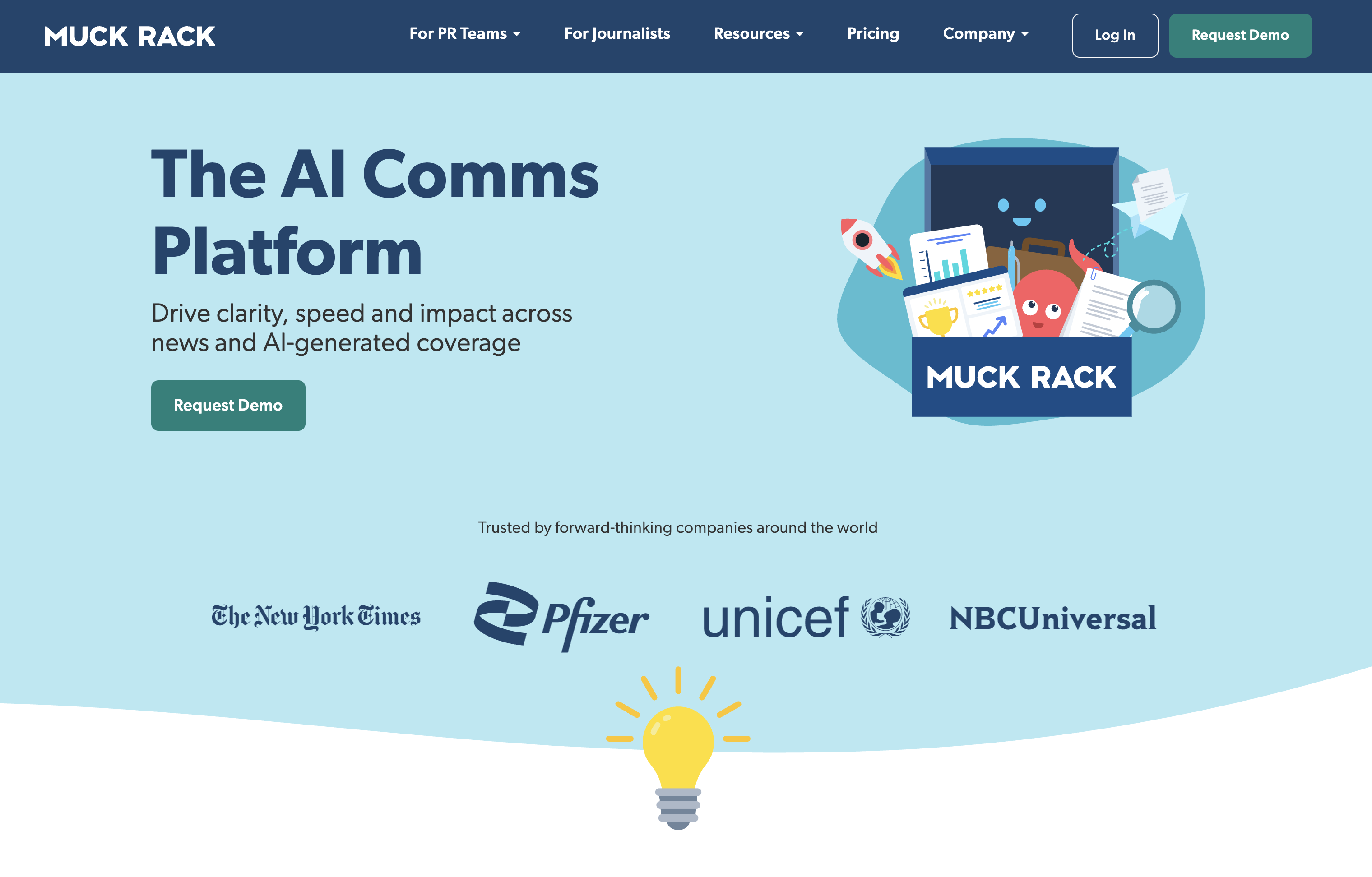
Muck Rack is primarily a media relations platform, but it earns a place in a PR analytics comparison because it connects outreach directly to coverage outcomes – something most standalone monitoring tools don't do. You can track which pitches led to coverage, monitor mentions across online news, social, broadcast, and print in one place, and use reporting tools to demonstrate reach and share of voice to stakeholders.
The journalist database is one of Muck Rack's main selling points: profiles are updated frequently and include recent coverage, social activity, and stated preferences – which makes it useful not just for finding contacts but for understanding what's already being covered before you pitch.
It's a more expensive option, and the closed pricing model can make evaluation awkward. But for teams that want their analytics to connect back to specific relationships and outreach decisions, the joined-up workflow is the main reason to consider it.
Best for: PR teams that want coverage analytics and media relations in one platform, particularly those that need to attribute coverage back to specific pitches or contacts.
Brandwatch
Starting price: Quote-based | No free trial | Around since: 2007 | Capterra: 4.3/5
Pros: Easy to use | Responsive customer support | Strong API
Cons: Can be expensive for smaller teams | UX has a learning curve | Automation limitations
Notable integrations: Salesforce Service Cloud, Bynder, Zendesk, and others.
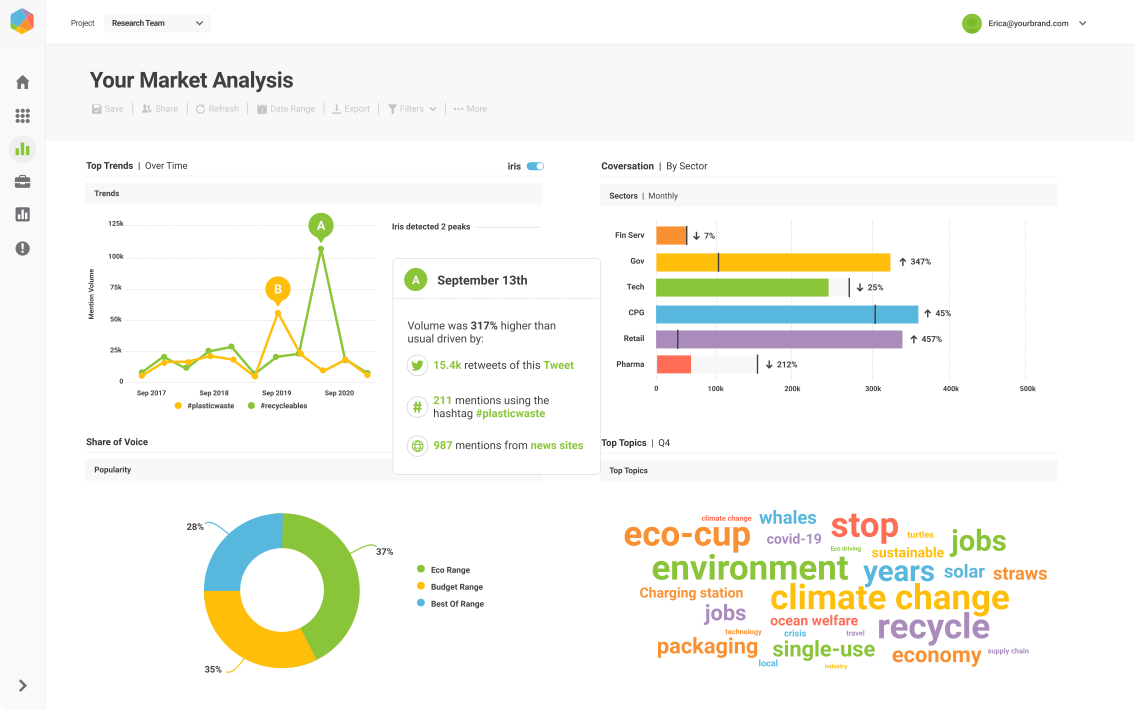
Brandwatch is a social intelligence platform rather than a PR tool in the traditional sense – it doesn't have a journalist database, outreach tools, or campaign reporting. What it does instead is analyse social media and online conversation at scale: who's talking about your brand, what they're saying, how sentiment is shifting, which demographics are most engaged, and how public perception compares to competitors.
For PR professionals, it's most useful as a strategic research layer. Before a campaign, it can show you what conversations are already happening around a topic. After one, it can measure whether sentiment moved. For crisis communications, the real-time social monitoring and spike detection give you early warning when something is spreading. It was acquired by Cision in 2021 and has expanded its toolkit significantly since.
While pricing is not clear from their website, reviews on Trustradius suggest that it may not be the best fit for smaller businesses on a budget:
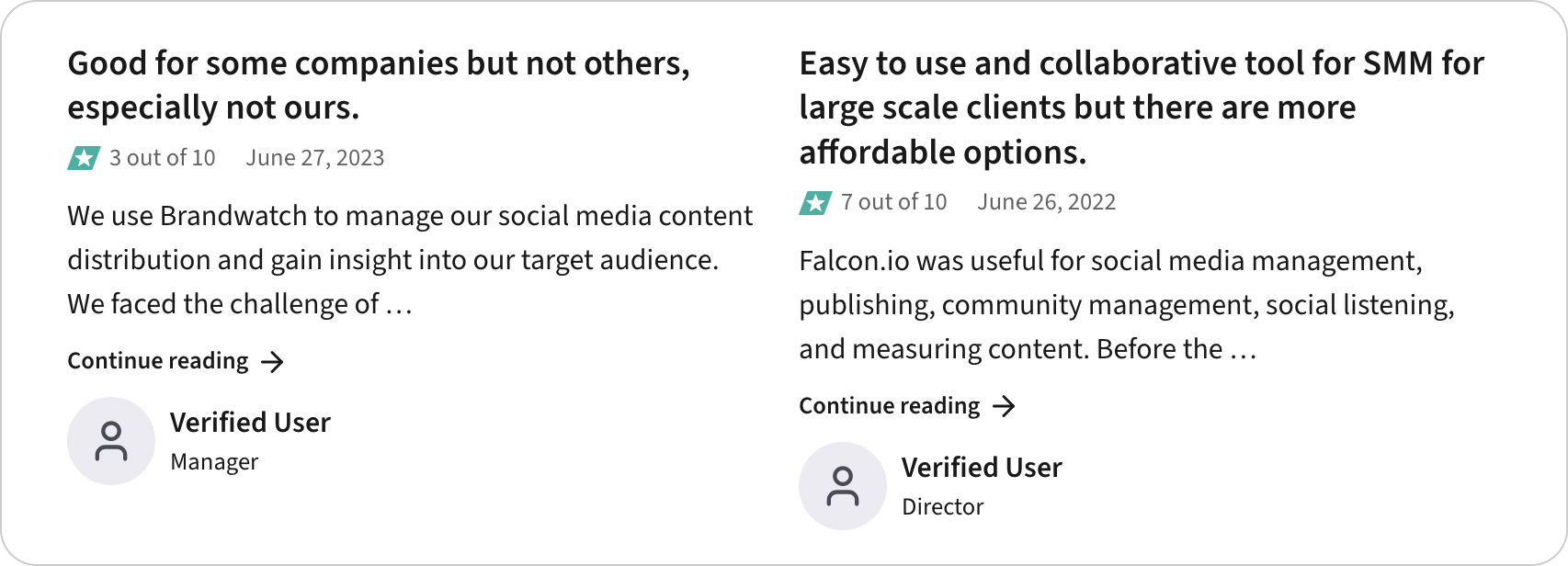
The main consideration is fit. At enterprise pricing, it's hard to justify for teams that primarily need monitoring and campaign analytics – those needs are covered by cheaper tools. Brandwatch earns its place when social listening and audience intelligence are central to how a communications team works, not just an occasional add-on.
Best for: Larger comms teams and agencies where social listening, brand sentiment tracking, and audience intelligence are core to how PR strategy is shaped.
Brand24
Starting price: $79/month billed annually | 14-day free trial | Around since: 2011 | Capterra: 4.7/5
Pros: User-friendly | Downloadable reports | Covers a wide range of social platforms
Cons: Sentiment reporting can be inaccurate | Occasionally misses mentions | Support can be patchy
Notable integrations: Telegram, TikTok, Instagram, Spotify, LinkedIn, YouTube, X, Reddit, Facebook; Zapier for custom connections.
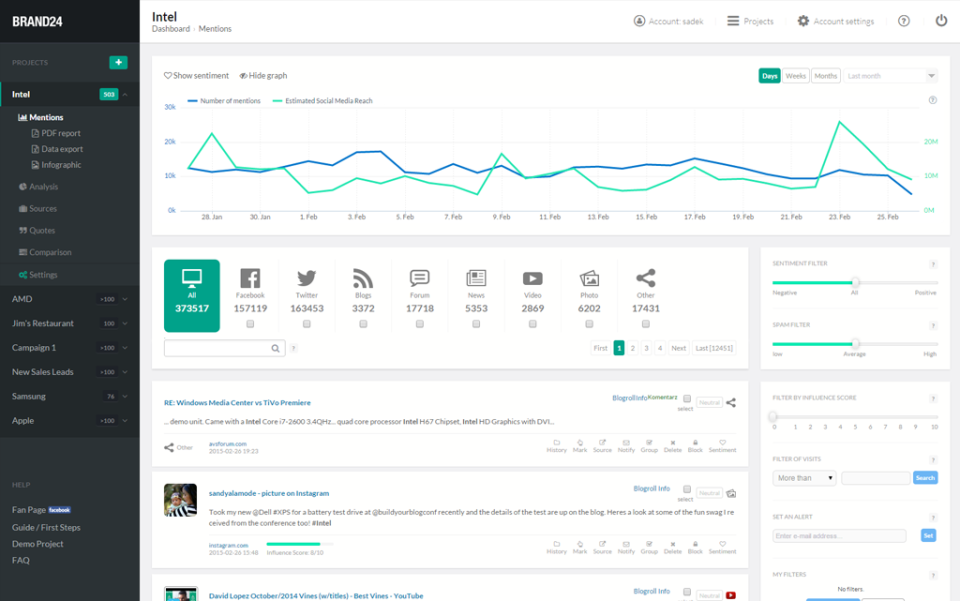
Brand24 is a media monitoring tool with a particular strength in sentiment analysis. It collects mentions from across the web and social media and categorises them by tone – giving you a clearer picture of whether coverage and conversations are trending positive, neutral, or negative, and how that shifts over time.
This makes it useful for tracking how a campaign has been received, spotting early signs of a reputational issue, or simply understanding the overall tone of what's being written about you. At its price point, it's one of the more accessible tools for teams that need sentiment tracking without enterprise-level spend.
Best for: Teams monitoring brand sentiment and reputation who want a user-friendly tool at a mid-range price.
BrandMentions
Starting price: $99/month | 7-day free trial | Around since: 2013 | Capterra: 5.0/5
Pros: Excellent value for the price point | Reliable alerts | Sentiment tracking across multiple channels | Clean interface
Cons: Learning curve to configure alerts well | Less depth than enterprise tools
Notable integrations: API access available on higher-tier plans.
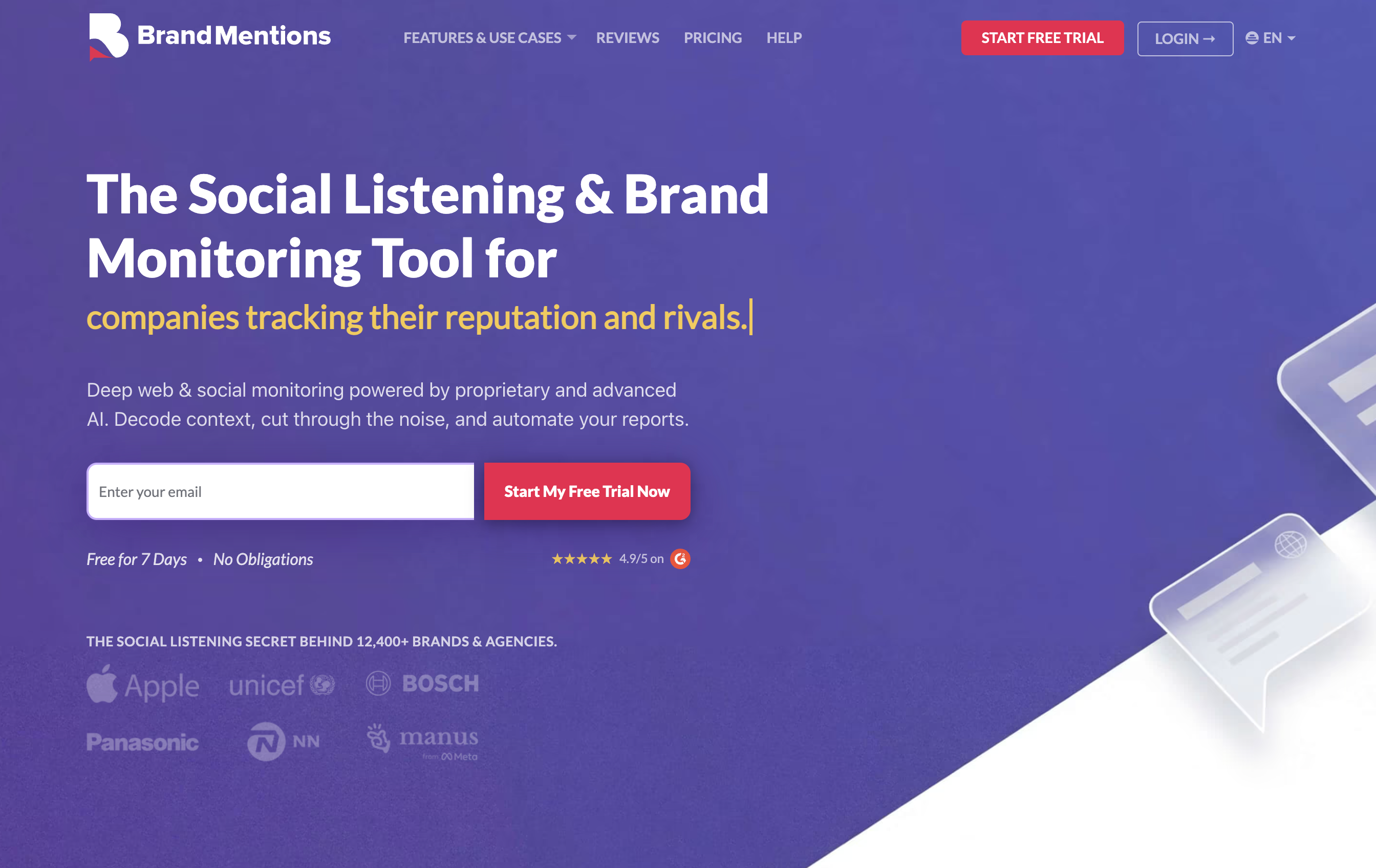
BrandMentions is a social listening and brand monitoring tool that consistently rates well for what it delivers at its price point. It tracks mentions across news sites, social media, forums, and review platforms, then categorises them by sentiment – giving you a running picture of how your brand is being talked about and whether the tone is shifting.
For PR teams, it works well as an accessible monitoring layer: you can set up alerts for your brand, key spokespeople, competitors, or campaign keywords, and surface mentions quickly without the complexity (or cost) of enterprise platforms. The interface is generally considered more approachable than tools like Brandwatch or Talkwalker, which matters when monitoring needs to be part of day-to-day workflow rather than a specialist function.
Where it falls short is depth. It's not a PR CRM, it has no outreach tools, and the data granularity doesn't match what you'd get from Meltwater or Cision. For straightforward monitoring and sentiment tracking on a tighter budget, though, it's one of the more reliable options in this price range.
Best for: Smaller PR teams and agencies that need solid brand monitoring and sentiment tracking without enterprise pricing.
CoverageBook
Starting price: $99/month (one month free on annual plan) | 30-day free trial | Around since: 2015 | Capterra: 4.9/5
Pros: Easy to use | Highly customisable reports | Downloadable PDF reports
Cons: Adding print media is tedious | Some stats may differ from other tools
Notable integrations: AuthDigital, DocHub, GoConvert.
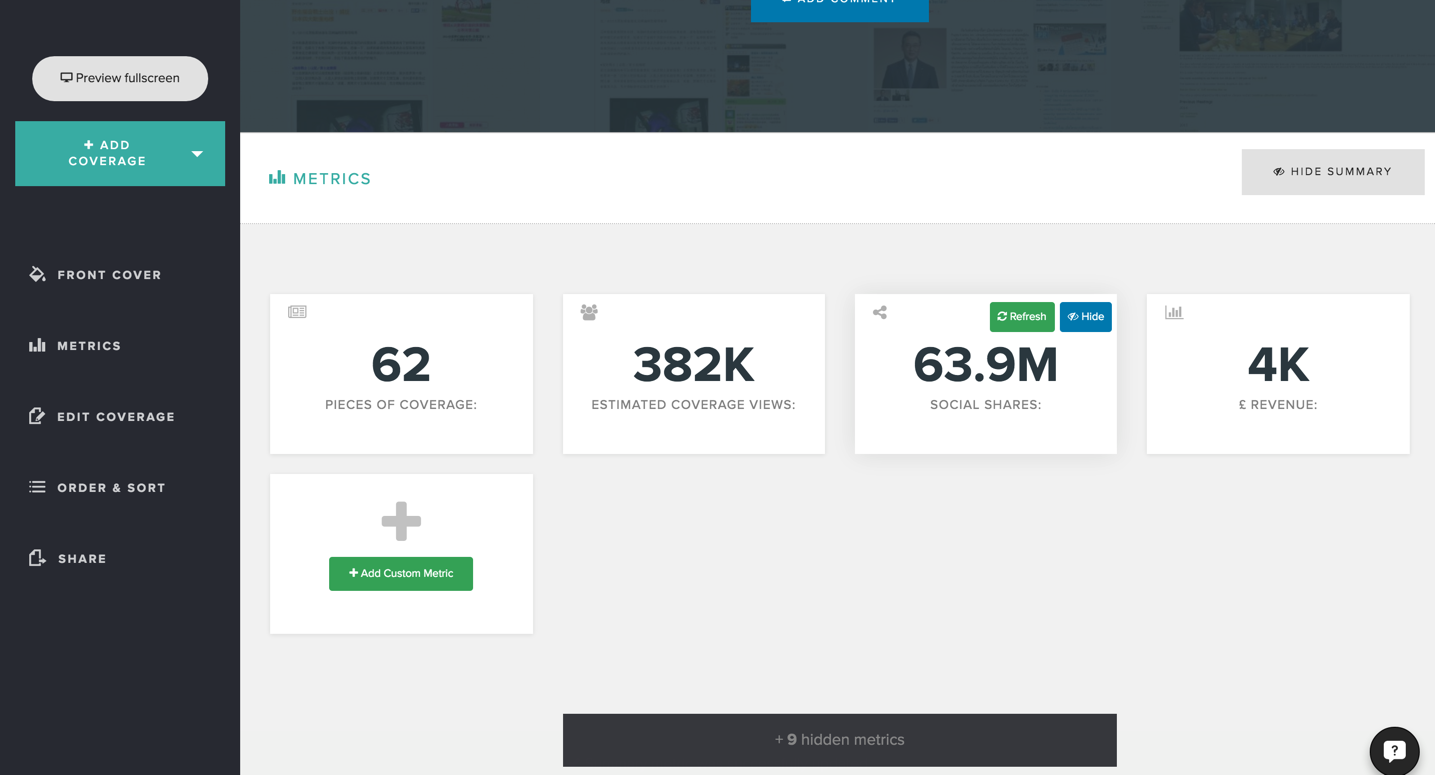
CoverageBook simplifies PR reporting by turning media coverage into clear, visual reports that are easy to share with clients and stakeholders. The idea is straightforward: paste in coverage links and the tool generates a report complete with thumbnails, metrics, estimated reach, social shares, and online readership data.
For agencies or teams that need to regularly demonstrate the value of PR work in a polished, client-ready format, it removes a significant amount of manual compilation. It works well alongside an all-in-one platform like Prezly – you can connect the two to pull in an overview of which contacts in your CRM are generating coverage.
Best for: Agencies and PR teams that need to present results clearly and professionally, particularly those producing regular client reports.
Link up your CoverageBook account with Prezly to get an overview of which contacts in your CRM are talking about you. Try it for yourself with a 100% obligation-free trial of Prezly.
The right PR analytics software should do more than surface data. It should help you connect activity to outcomes, understand what's working, and make better decisions over time.
One of the most common frustrations in PR measurement is reporting on key metrics that look substantial but don't hold up to scrutiny. Volume of mentions, estimated impressions, and raw reach figures are easy to generate – but they don't tell stakeholders whether key messages landed, whether the right audiences saw the coverage, or whether media relations efforts are improving over time.
Credible PR metrics go further: engagement rates on specific stories, coverage quality by media outlet, share of voice against competitors, sentiment shifts over a campaign period, and whether your brand's presence in the media landscape is growing or static. The best PR analytics tools make these visible without requiring hours of manual work to compile.
Analytics tools only tell part of the story when they're isolated. Look for platforms that connect with what you're already using – your CRM, outreach tools, monitoring feeds, or website analytics. The goal is being able to see campaign activity, coverage, and web traffic in relation to each other, not in separate tabs. Teams that have to manually pull data from three places to answer one question tend to stop doing it.
The difference between knowing about a piece of coverage when it publishes and finding it the next morning matters more in some situations than others. For brands managing spokespeople, navigating sensitive topics, or working in fast-moving industries, real-time alerts are a near-essential capability. For teams running slower-cycle campaigns, daily digests may be enough. Be honest about which you actually need before paying for the former.
A product launch has different measurement needs than an ongoing reputation programme or a crisis response. If every report you generate looks the same regardless of the campaign, the analytics aren't doing much work. The best tools let you track what actually matters for each piece of PR activity – and present it in a format your specific stakeholders will find useful, rather than a generic template full of metrics they'll ignore.
This one sounds obvious, but it matters more than most tool comparisons acknowledge. A platform with sophisticated analytics that takes three weeks to configure, requires specialist knowledge to maintain, or generates so much data that drawing conclusions becomes its own project – that tool will get underused. The most valuable PR analytics tool for most teams is one people actually open and act on, not the most feature-complete option available.
A campaign sends on Tuesday. The coverage lands on Thursday. The journalist who covered it returns to your newsroom two months later and runs a follow-up piece. Can your analytics connect those dots?
Most tools can't. They capture a moment – usually the campaign window – and stop. The most useful PR analytics platforms show you how performance evolves over time: which stories continue generating web traffic, which media relationships are deepening, and whether your coverage is building towards something or resetting to zero after each campaign.

JK! There's no secret sauce, so don't waste your time looking for one. Instead, do these three things (you won't believe #2!)
When stories live only in inboxes, they're difficult to track beyond the initial open or click.
When they live in a newsroom – publicly accessible, searchable, and permanently available – they generate ongoing data. You can see how a story performs over weeks or months, which journalists return to it, how web traffic evolves after the initial campaign, and which pieces continue to attract attention in online articles and search long after distribution ends.
This turns PR analytics into a feedback loop rather than a report. Instead of isolated data points, you start to see patterns. Instead of just tracking PR campaigns, you start understanding what builds momentum over time – and which stories and media outlets are driving the most valuable coverage.
For most PR teams, that's the most useful shift analytics can enable.
The best PR analytics software doesn't just tell you what happened. It helps you improve what happens next.
- Monitoring tools show you where you appeared
- Campaign tools show you who engaged
- Publishing-first tools show you what builds over time
For most modern PR teams, the strongest approach combines all three – with publishing-first analytics at the core, because it's the only model where data improves over time, visibility compounds, and insights become more actionable with each campaign.
The right choice depends on where your biggest measurement gap sits. If you struggle to demonstrate long-term value, publishing-first analytics matters most. If you need to understand coverage volume and reach across the global media landscape, monitoring tools fill that gap. If client reporting is the pressure point, a tool like CoverageBook solves it directly.
Most teams end up with two or three tools covering different parts of the stack. The goal isn't to manage everything on a single platform – it's to make sure the most important questions actually have answers.
Start your 14-day free trial of Prezly – no credit card required – and see how modern PR analytics works when publishing, outreach, and relationships are measured together. Curious about pricing first? See plans here →
What is the best PR analytics software?
There's no single best option – it depends on what you're actually trying to measure. For end-to-end analytics that connect publishing, outreach, and relationships in one place, Prezly is the strongest choice for most PR teams. For visual client reporting, CoverageBook is hard to beat. For real-time brand monitoring, Mention and Brand24 are solid at accessible price points. Enterprise teams with larger budgets tend to look at Cision or Meltwater. The practical approach is to identify your biggest measurement gap first – long-term impact, campaign performance, coverage volume, or client reporting – and choose accordingly.
What is PR analytics?
PR analytics is the practice of tracking and measuring the performance of public relations activity – coverage, campaign engagement, audience reach, and media relationships – to understand what's working and why. At a basic level this means monitoring mentions and reporting on reach. At a more useful level, it means connecting outreach activity to coverage outcomes, understanding which stories build ongoing visibility, and demonstrating how PR contributes to business goals over time. The distinction matters: activity-based reporting tells you what happened; good PR analytics tells you what to do differently next.
Is PR going to be replaced by AI?
Not in any meaningful sense. AI can assist with some parts of PR work – drafting, translating, summarising – but the core of effective PR is relational: building trust with journalists, understanding what a story needs to land, and maintaining a consistent presence over time. Those things require human judgment and genuine relationships. What AI is changing is the volume of automated outreach that PR professionals now compete against, which actually makes the relationship-led, quality-first approach more valuable, not less.
What are the big 5 PR firms?
The five largest global PR firms by revenue are Edelman, Weber Shandwick, BCW (Burson Cohn & Wolfe), Hill & Knowlton, and FleishmanHillard. These are typically part of larger communications holding groups and serve major multinational clients. Most PR teams – whether in-house or at independent agencies – operate at a different scale and have different needs than these firms, which is worth keeping in mind when evaluating tools or strategies that are built for enterprise use cases.
Published: April 8, 2019. Last updated: May 2026.
![Guide: The 30+ Best Digital PR Tools & Software [In 2026]](https://cdn.uc.assets.prezly.com/43b4f2a9-45b8-4275-880b-737b1e67ead0/-/crop/4000x2739/0,1457/-/preview/-/resize/3000/austin-poon-JO_S6ewBqAk-unsplash.jpg)


Social listening and sentiment tools